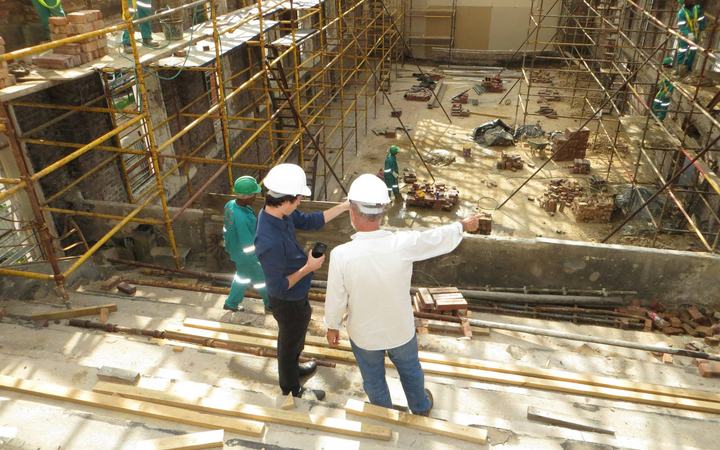
Job hazard analysis: protecting stairs, floor holes, and openings
Cover and guard floor holes, stairwells, and shafts during construction.
- 4 steps
- 4 PPE items
- Editable in Reldro

The job hazard analysis
PPE required: Hard hat, Safety glasses, Gloves, Safety boots
1. Identify openings
What could go wrong
Unmarked holes and edges
How we control it
List every opening on each floor from the plans, and add new ones as they're made.
2. Fit covers and guardrails
What could go wrong
Covers that slide, bend, or are too weak
How we control it
Use covers rated for the load, secured against movement, and marked. Use guardrails around larger openings and stairwells.
3. Maintain them
What could go wrong
Covers removed and left off
How we control it
Check them every shift. Whoever removes a cover must replace it, or guard the opening.
4. Remove when finished
What could go wrong
Removing protection too early
How we control it
Take protection away only when permanent guards are in place.
- Mark covers clearly so no one mistakes them for ordinary floor or removes them.
When to use it
Use it when a floor, stairwell, or shaft is cut or formed, and review it as the building changes.
Review it with the crew before the work starts, change anything that doesn't match how you'll do the job, and update it when the method, the equipment, or the site changes.
Use this JHA in Reldro
- It arrives ready to edit, and your crew uses it on their phone, even without signal.
- Failed items become corrective actions with an owner and a due date.
- Every completed one is kept with the site, the date and who did it.