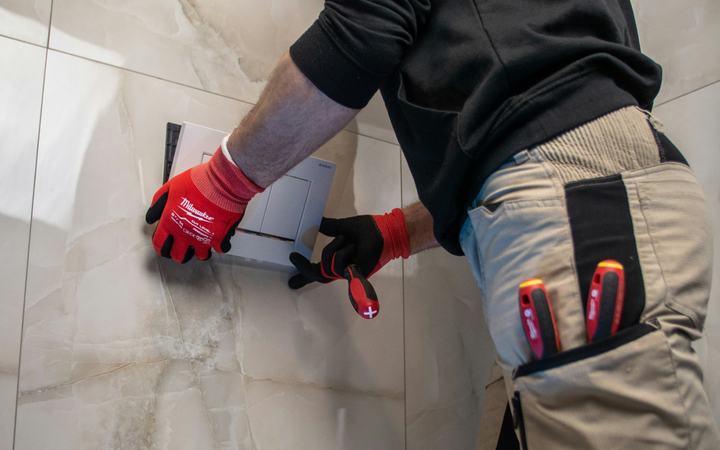
Job hazard analysis: hand and power tool use
Using drills, saws, grinders, nail guns, and other hand and power tools.
- 4 steps
- 4 PPE items
- Editable in Reldro
The job hazard analysis
PPE required: Safety glasses or face shield, Hearing protection, Gloves suited to the tool, Dust mask or respirator for dust
1. Choose and inspect the tool
What could go wrong
Wrong or damaged tool, missing guard
How we control it
Use the right tool for the job. Check the cord, plug, guard, and switch. Tag out a damaged tool.
2. Set up the work
What could go wrong
Material moves during the cut, dust, noise, tripping on cords
How we control it
Clamp the work. Use dust control or a respirator for silica and other dust. Keep cords out of the way and use GFCI protection.
3. Operate the tool
What could go wrong
Kickback, contact with the blade, flying debris
How we control it
Keep both hands on the tool, keep guards on, and let the tool reach full speed before cutting. Disconnect power before changing blades or bits.
4. Put the tool away
What could go wrong
Tools left running or on the ground
How we control it
Switch off and unplug, wait for moving parts to stop, and store the tool.
- Cutting concrete, brick, and stone releases silica dust. Use water or extraction and a suitable respirator.
- Never carry a tool by its cord.
When to use it
Use it for any task with blades, bits, moving parts, or high force.
Review it with the crew before the work starts, change anything that doesn't match how you'll do the job, and update it when the method, the equipment, or the site changes.
Use this JHA in Reldro
- It arrives ready to edit, and your crew uses it on their phone, even without signal.
- Failed items become corrective actions with an owner and a due date.
- Every completed one is kept with the site, the date and who did it.